Why AI Innovation Teams Fail—and How to Fix It
Enterprises often launch ambitious AI initiatives only to see them stall, underperform, or fade into “proof-of-concept purgatory.” The reason isn’t always the technology—it’s the team structure and culture behind it.
Building AI innovation teams that actually deliver requires more than hiring a few data scientists. It’s about aligning diverse roles, leadership, and organizational support to transform AI from experiment into impact.
1. Start with Strategy, Not Just Skills
Many organizations mistake hiring for a tech-first strategy: “We need data scientists and machine learning engineers.” While essential, technical talent alone won’t deliver transformation.
Effective AI innovation teams begin with strategic clarity:
- What business problems are we solving?
- How will AI support broader transformation goals?
- What metrics define success (cost reduction, efficiency, revenue growth)?
Without this foundation, even the best teams lack direction.
2. Build Cross-Functional Collaboration
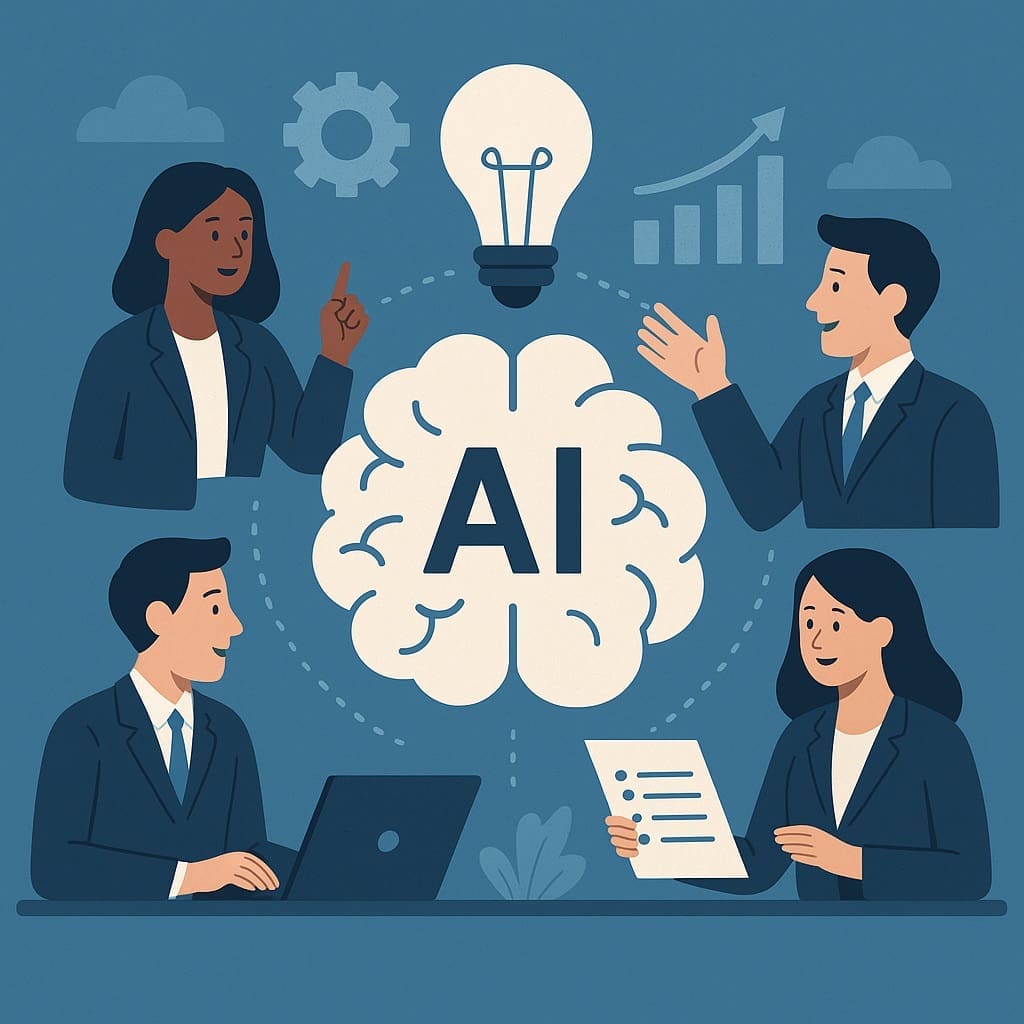
AI projects fail when they’re siloed in IT or R&D. The most successful teams bring together:
- Business leaders who set goals and define ROI.
- Data engineers who prepare high-quality data pipelines.
- Developers and architects who integrate models into production.
- Project managers who keep timelines and stakeholders aligned.
- Security and compliance experts who ensure responsible deployment.
This “boardroom to buildroom” approach ensures strategy translates into working systems.
3. Balance Experimentation with Discipline
Innovation requires creativity—but without guardrails, teams get stuck in endless prototyping. To avoid this:
- Encourage lightweight experiments with clear “stop or scale” criteria.
- Use agile project management to iterate quickly.
- Implement MLOps practices for version control, monitoring, and retraining.
The right balance helps teams innovate responsibly while maintaining delivery discipline.
4. Empower Leadership and Psychological Safety
AI innovation teams thrive when leaders set vision and guardrails but allow autonomy in execution. Key leadership practices include:
- Setting clear KPIs tied to business outcomes.
- Encouraging risk-taking without fear of blame.
- Celebrating learnings from failed experiments as much as successes.
- Providing resources for upskilling and cross-training.
Teams that feel safe to innovate are more likely to produce transformative results.
5. Embed Ethics and Compliance Early
AI innovation isn’t just about speed—it’s about trust. Embedding ethics, security, and compliance from day one avoids expensive rewrites and reputational risks later.
Practical steps include:
- Creating model documentation (model cards, datasheets).
- Running bias detection and fairness tests during development.
- Including legal and compliance officers in sprint reviews.
This builds credibility and ensures innovations are enterprise-ready.
6. Measure, Scale, and Celebrate Wins
Finally, innovation must lead to measurable outcomes. Build feedback loops around:
- ROI tracking – Did we cut costs, increase revenue, or improve efficiency?
- Adoption metrics – Are stakeholders actually using the solution?
- Scalability checks – Can this pilot expand enterprise-wide?
Celebrate milestones to reinforce momentum and attract talent eager to work on impactful AI projects.
Conclusion: Teams as the Engine of AI Transformation
AI doesn’t fail because the models don’t work—it fails because the teams building them lack the right strategy, structure, or support.
By aligning strategy, fostering cross-functional collaboration, balancing experimentation with discipline, empowering leadership, embedding ethics, and measuring impact, organizations can build AI innovation teams that actually deliver.
The payoff? Not just working prototypes, but real business transformation powered by AI.
Want More?
Want to build AI teams that succeed the first time? Learn how .NET developers, data engineers, and business leaders can collaborate to create scalable AI systems that drive measurable ROI.
- Our first book, AI Simplified: Harnessing Microsoft Technologies for Cost-Effective Artificial Intelligence Solutions: Empower Your Existing Team to Build Low-Cost, Low-Risk, Highly-Functional AI is all about setting up an AI Innovation Team
- Check out our free blog articles
- Check out our free infographics
- Follow us on social media to see more of our articles
