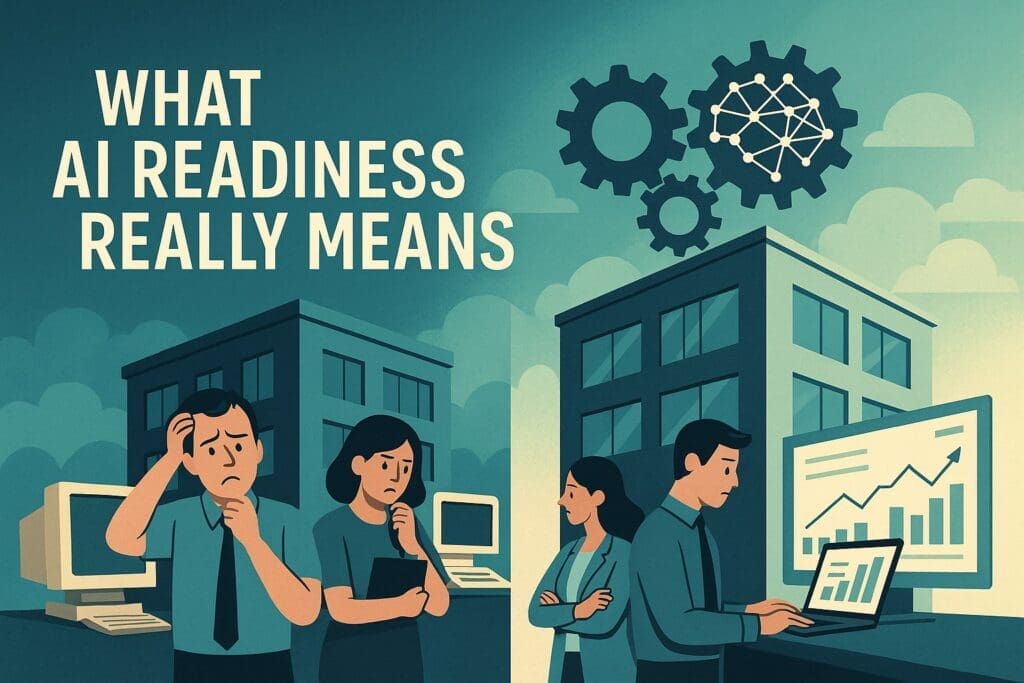
Artificial intelligence (AI) has shifted from buzzword to boardroom priority. But before mid-market organizations can reap the benefits—improved operations, smarter decisions, enhanced customer experiences—they must ask a fundamental question:
Are we really ready for AI?
AI readiness isn’t about hiring a data scientist or spinning up a pilot chatbot. It’s a multifaceted state involving leadership alignment, infrastructure, culture, and measurable strategy. This guide breaks down what true AI readiness means—and how mid-sized companies can get there without wasting money, confusing teams, or chasing hype.
AI Readiness Is Not Technical—It’s Strategic
Many organizations believe they need better tools, more data, or a more advanced tech stack before starting with AI. While those matter, the real foundation is strategic:
- Do we have a clear business problem to solve?
- Have we aligned AI projects with measurable KPIs?
- Do we have executive buy-in and governance?
A fancy ML pipeline means little if it doesn’t support a business goal. Start with your strategic objectives, not with tools or models.
Assess Your Maturity Honestly
AI readiness is not binary. It exists on a spectrum:
| Level | Description |
|---|---|
| Level 0 | No data infrastructure, no AI understanding |
| Level 1 | Basic reporting, limited understanding of AI potential |
| Level 2 | Early automation or ML experiments, siloed |
| Level 3 | Cross-functional AI projects tied to business metrics |
| Level 4 | Operationalized AI with monitoring, governance, ROI tracking |
Most mid-market firms are at Level 1 or 2. That’s okay—but know where you are, so you don’t skip steps or overbuild.
Readiness Means Culture, Not Just Code
A common failure pattern: execs hire a contractor to build an AI system, but the employees ignore it.
Why? Because people weren’t prepared:
- No training or explanation
- No buy-in from department heads
- No workflow changes to support adoption
If AI is “done to” employees rather than “done with” them, they will resist—even if the model is accurate.
Mid-market leaders must treat AI as change management, not just technology adoption.
Mid-Market Strength: Existing Infrastructure
Here’s the good news: most mid-sized businesses already have the ingredients for AI success:
- A reliable .NET-based system
- SQL Server or similar database with years of clean(ish) data
- Stable business processes and domain knowledge
This gives you a leg up compared to startups or chaotic enterprises. AI doesn’t require a ground-up rebuild—it requires selective, strategic enhancement.
Start with “adjacent innovation”: things like:
- Intelligent document processing
- Forecasting tools layered over Excel/ERP data
- Sentiment analysis on existing customer emails or support tickets
A Simple Readiness Checklist
Use this framework to evaluate your org’s current state:
✅ Do we have a clearly defined business objective for AI?
✅ Do our leaders understand AI’s capabilities and limitations?
✅ Do we know what data we have—and whether it’s useful?
✅ Do we have budget, timeline, and ownership defined?
✅ Have we included all relevant stakeholders (IT, security, operations, end users)?
✅ Are we prepared to pilot, fail, iterate, and improve?
If you said “no” to more than two of these, your focus should be planning, not prototyping.
Don’t Fall for the AI Maturity Theater
Vendors and influencers will try to sell you the illusion of readiness:
- “Just connect your data and magic happens.”
- “Use our no-code builder to deploy production AI in a week.”
- “This one chatbot will revolutionize your sales team.”
Reality: those tools can help later, but only if you’ve done the strategic prep.
Start with:
- A real problem
- A strong team
- A phased roadmap
Then bring in tools that match your culture and capabilities.
Conclusion: Readiness Is a Mindset
You don’t need to be perfect. You need to be aligned, intentional, and iterative.
If your team understands why you’re doing AI, knows what success looks like, and is equipped to handle the change—it doesn’t matter whether you’re using Azure, ML.NET, or Excel macros to start.
AI readiness is about solving problems—not chasing hype.
Start small. Start smart. Start now.
Bonus: Want to Know If You’re Not Ready?
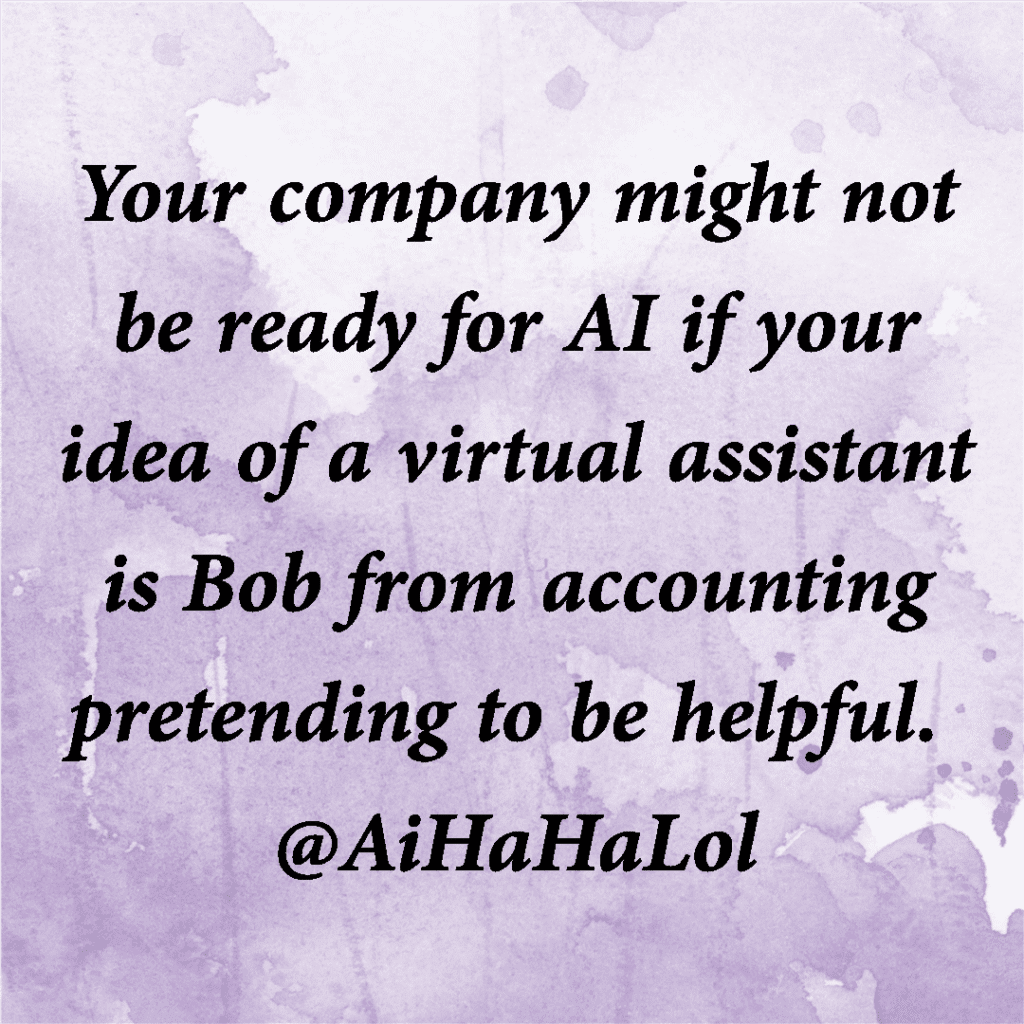
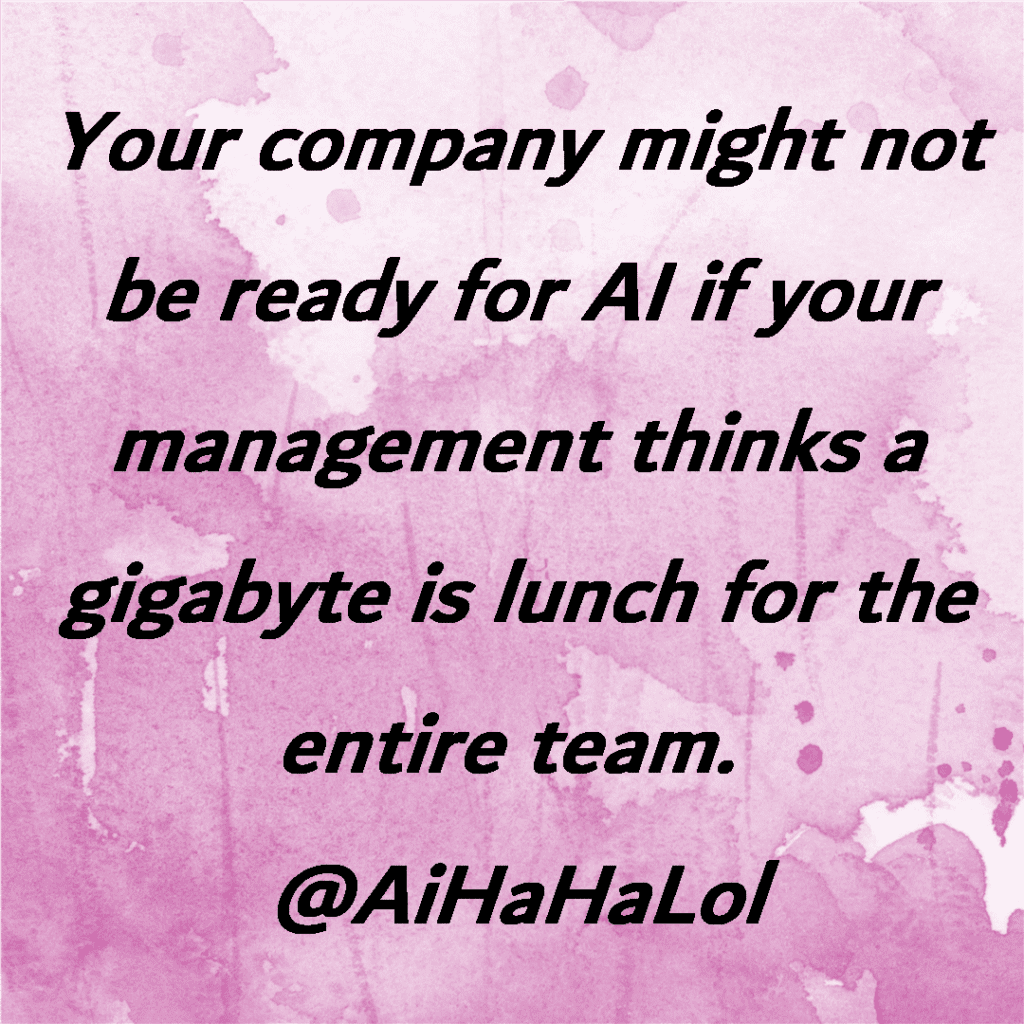
We have a sister company—AiHaHaLol—that takes AI way less seriously (on purpose). They’ve created a meme series titled:
Your Company Might Not Be Ready for AI If…
AiHaHaLol insisted we give you a taste:
- …your AI strategy lives in a PowerPoint called “Q3_Final_2022_v8.pptx.”
- …your “data lake” is an Excel file emailed every Friday.
- …the only machine learning your team does is figuring out how the coffee maker works.
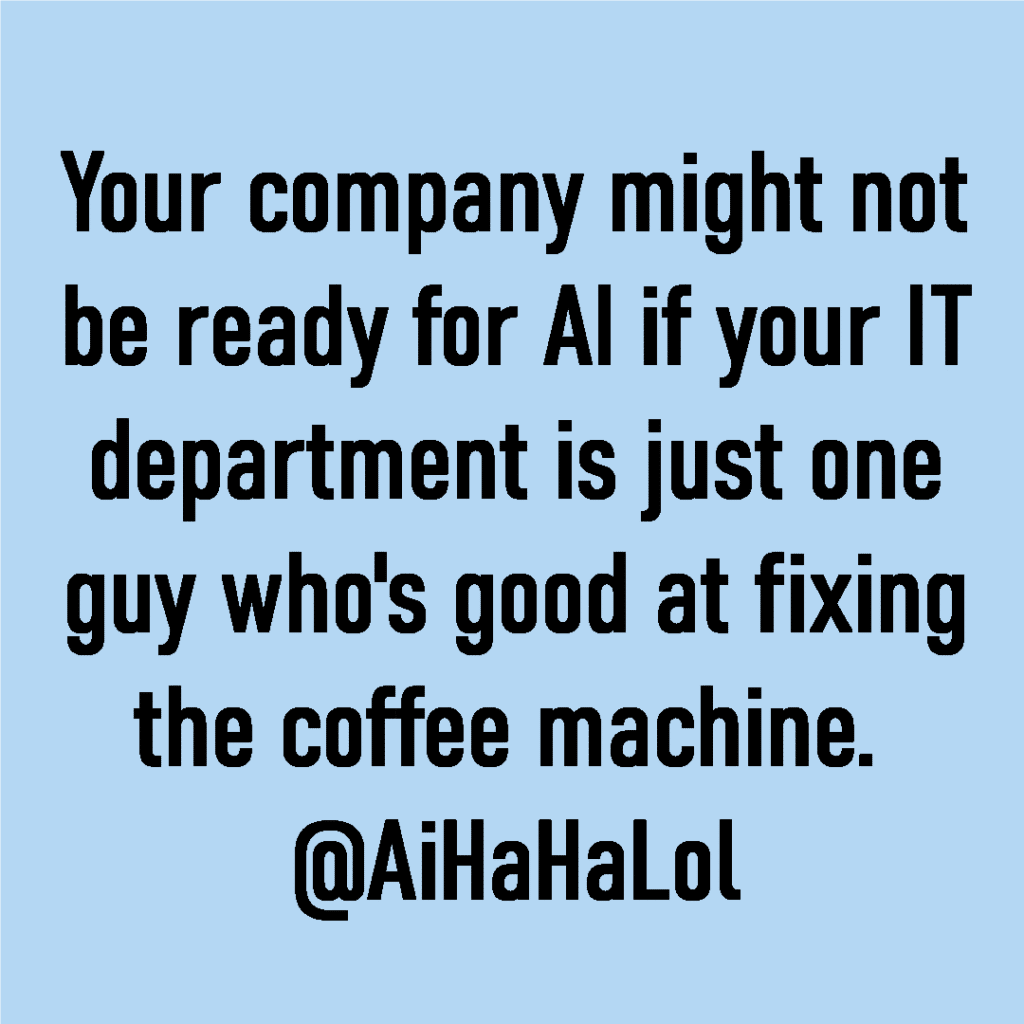
For more AI comic relief with brutal truth:
👉 Visit AiHaHaLol on Facebook, Instagram, Twitter (X), YouTube, TikTok or LinkedIn
