Introduction: AI Success Isn’t Just About Algorithms — It’s About People
Everyone’s obsessed with AI tools, models, and platforms.
But here’s the hard truth most leaders ignore:
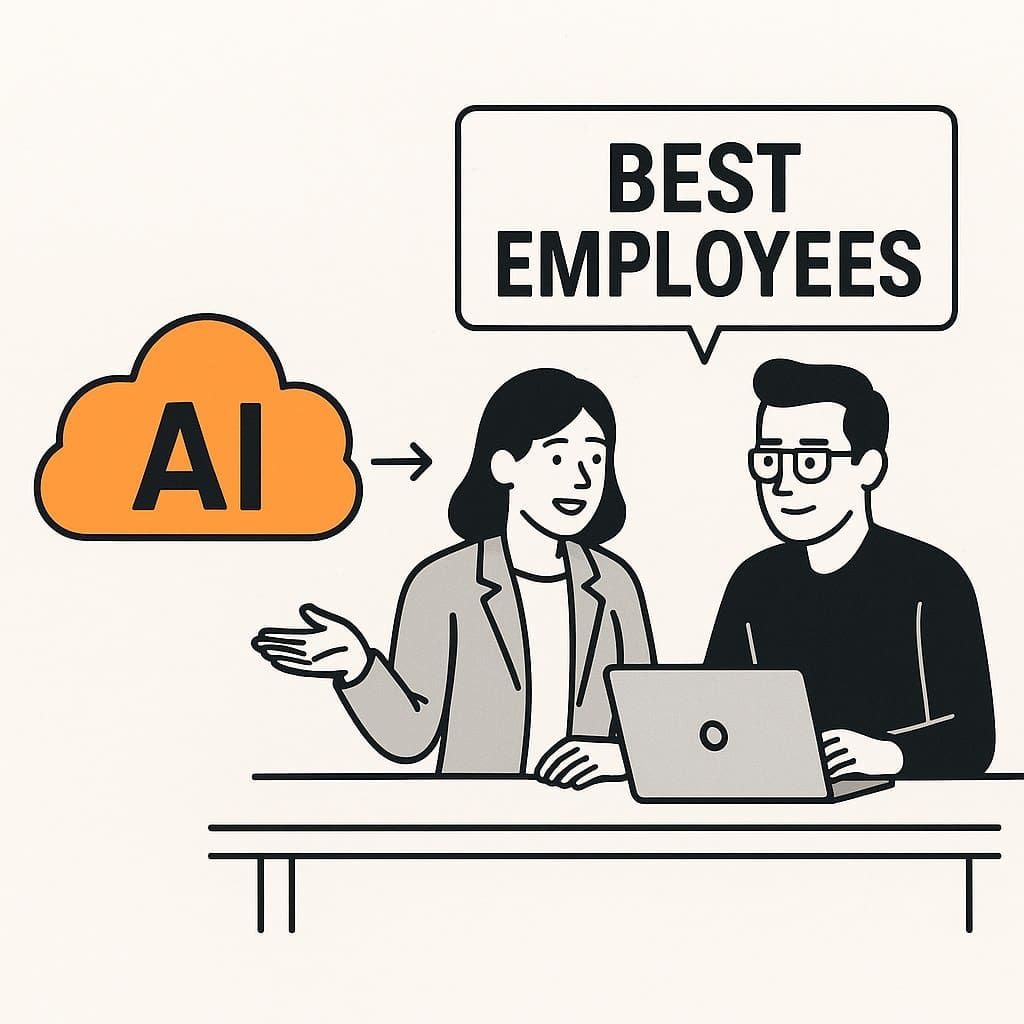
The success or failure of your AI initiative depends more on your best employees than on your tech stack.
If you want AI to deliver real business value, you need the people who understand your workflows, pain points, and exceptions — and those are almost never consultants or external vendors.
They’re already on your payroll.
1. Why AI Projects Fail Without Employee Input
When companies adopt AI without involving internal experts, they run into problems like:
- Automating the wrong processes (based on assumptions, not insight)
- Overlooking edge cases that only experienced employees know about
- Wasting months building tools nobody trusts or uses
What’s missing? Context. Judgment. Nuance.
And those live in the minds of your top performers.
2. Your Best Employees = Your Internal AI Consultants
You already have a secret weapon:
✅ People who know which tasks are repetitive
✅ People who know where the friction really is
✅ People who’ve seen five different exceptions for every “rule”
These employees don’t just keep your business running — they hold the mental model your AI needs to be trained on.
Don’t just ask them to “try the new tool.” Ask them to help design it.
3. A Simple Framework for Tapping Into Employee Insight
Here’s how to involve your best employees in AI design — without overwhelming them:
| Step | What to Do |
|---|---|
| 1. Identify | Choose 1–2 top performers from each business function |
| 2. Interview | Ask what they do repeatedly, fix often, or wish was automated |
| 3. Prototype | Use their input to build a small AI assistant or automation |
| 4. Review | Let them test and give feedback before rollout |
| 5. Iterate | Refine the model based on their lived experience |
This isn’t a one-time event — it’s a feedback loop.
4. Why This Works So Well for .NET and Microsoft-Based Teams
If your teams are working in .NET, Azure, and the Microsoft ecosystem, the integration is seamless:
- ML.NET lets you build AI tools using the languages they already know
- Semantic Kernel allows you to define workflows the way humans think
- Azure AI provides scalable infrastructure without vendor lock-in
You don’t need to teach new tools. You just need to extract their expertise and encode it.
5. Warning: Don’t Sideline Your Experts
Common mistake: Executives try to “protect” key employees from distractions.
But in AI transformation, that’s like trying to redesign a cockpit without consulting the pilot.
If you don’t include them:
- You’ll build the wrong things
- You’ll lose trust
- They may leave when the system starts breaking what they worked hard to build
Include them now — or lose them (and the project) later.
Conclusion: Build AI With Your People, Not Around Them
AI success isn’t about flashy tools. It’s about aligning automation with reality.
And that reality lives in the minds of your best employees.
If you treat them like partners — not just users — your AI projects will move faster, cost less, and deliver more.
